
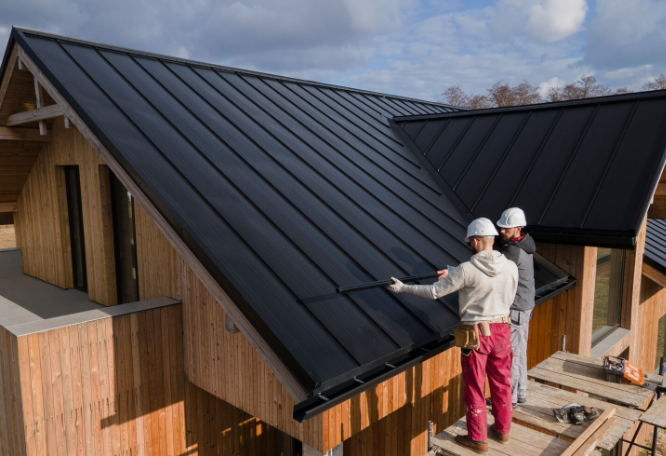
Your roof is among the most crucial protection systems in your house. It protects your family and property from rain, wind, hail, snow, and year-round temperature fluctuations. However, many roofing issues start with minor problems that are hard to notice.
Over time, a loose shingle, broken flashing, or clogged gutter may let water into the building. Knowing basic roof maintenance and when to call in the professionals will not only help to save you from costly repairs, but will help to prolong your roof’s life.
Regularly Check Your Roof
A quick inspection will be one of the easiest ways to detect early roofing issues. From the ground, watch for damage, and inspect areas of the home that can be reached in the attic for daylight or water. Inspect after severe weather for missing or lifted shingles, damaged flashing, loose materials, and debris buildup.
Avoid climbing onto the roof unless you have the appropriate equipment and experience. A professional inspection is safer and can find issues that might be easily overlooked from the ground.
Clean Drainage and Gutters
Residential roofing primarily protects against water damage through effective drainage. Rainwater should drain from the roof and foundation efficiently through gutters and downspouts. Debris, leaves, branches, and other obstructions can interfere with drainage and lead to water pooling around the perimeter of the roof.
Regularly clean gutters and ensure that downspouts drain water from the foundation of the home. If water still overflows after cleaning, this could mean the system needs adjusting or professional assessment.
Cover Sensitive Roofing Areas
There are parts of a roof that are more prone to leaks than others. Roof flashing around chimneys, vents, skylights, and roof valleys keeps water out of the weak spots. In time, flashing can also become loose, corrode, or have gaps in the sealing.
Additionally, homeowners should look for wear and tear occurring in the pipe boots and poor sealant on roof penetrations. If timely roof repair is considered, moisture will not penetrate the roof deck and the interior structure.
Knowledge of Storm Damage Prevention
A roof can be subjected to a lot of stress when there is severe weather. Strong winds can cause shingles to come up, and hail can cause damage to the roofing materials and flashing.
During the pre-storm season, trim branches that might fall on the roof, and tie down loose outdoor items that might blow away. Check the property after a great storm. Inspect for obvious damage, and examine the attic in search of water intrusion.
Know When You Need Professional Roof Repair
Other roofing problems can go beyond the scope of basic maintenance. If you see active leaks, missing shingles, broken or torn flashing, or areas that are sagging or have been damaged by storms, roof repair might be necessary.
It is critical to hire a professional to assess the water when it reaches the attic, insulation, ceiling, or wall. When moisture is trapped, it can lead to mold build-up and damage to structural materials. A roofing expert can establish if repairs are needed to a particular area or a larger area of the roofing system must be addressed.